1909–1959
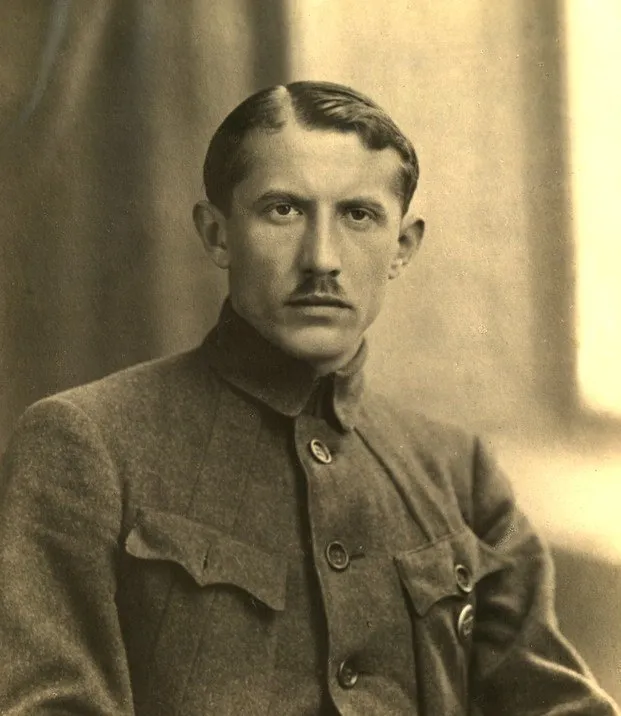
Stepan Bandera
Leader of the OUN-B
Leader of the OUN-B, whose followers proclaimed the Act of Restoration of the Ukrainian State in 1941. For many Ukrainians a symbol of the fight against the Nazi and Soviet regimes; at the same time one of the most contested figures in history.
Key accomplishments
- Head of the OUN’s regional executive in western Ukraine (1933–1934)
- Led the OUN-B, which proclaimed the Act of Restoration of the Ukrainian State on 30 June 1941
- For refusing to revoke the Act, held by the Nazis in Berlin and then in the Zellenbau block of Sachsenhausen concentration camp (1941–1944)
Who he was
Stepan Bandera was born in the village of Staryi Uhryniv in Prykarpattia, the Carpathian foothills, into the family of a Greek Catholic priest. From his youth he was active in the underground movement for Ukrainian independence. In 1933 he became head of the OUN’s regional executive. In 1936 a Polish court sentenced him to death for organizing the assassination of Minister Bronisław Pieracki; the sentence was commuted to life imprisonment.
His story
In 1940 the OUN split, and Bandera became leader of its revolutionary wing, the OUN-B. On 30 June 1941 in Lviv, his followers proclaimed the Act of Restoration of the Ukrainian State. Nazi Germany did not accept this. Bandera was arrested and held first in Berlin and then, from 1942 until the autumn of 1944, in the Zellenbau, a special block for political prisoners at Sachsenhausen concentration camp. Two of his brothers, Oleksandr and Vasyl, died in Auschwitz in 1942.
After the war Bandera lived in exile in Munich and headed the leadership of the OUN’s Foreign Units. On 15 October 1959 he was killed by KGB agent Bohdan Stashynskyi.
Debates and assessments
Bandera is one of the most controversial figures in Ukrainian history. For many Ukrainians he is a symbol of resistance to both the Nazi and the Soviet regimes.
At the same time, historians take a critical view of the radical, authoritarian ideology of the OUN-B. In 1939–1941 the organization cooperated with German military intelligence (the Abwehr), including in creating the Nachtigall and Roland battalions, and the text of the Act of 30 June 1941 declared cooperation with Nazi Germany. OUN-B documents from 1941 contain antisemitic provisions, and researchers debate the role of Ukrainian militias in the Lviv pogrom of July 1941. Historians also debate the ideological and organizational responsibility of the movement’s leadership for the violence against the Polish population of Volhynia in 1943; Bandera himself was in German imprisonment at the time.
The courts ruled the 2010 decree awarding Bandera the title Hero of Ukraine unlawful (2010–2011). For decades Soviet propaganda used his name to discredit any Ukrainian independence movement.
Why it matters today
The figure of Bandera shows how complex the struggle for independence was in the 20th century. It teaches us to distinguish between historical facts, historians’ assessments and propaganda.