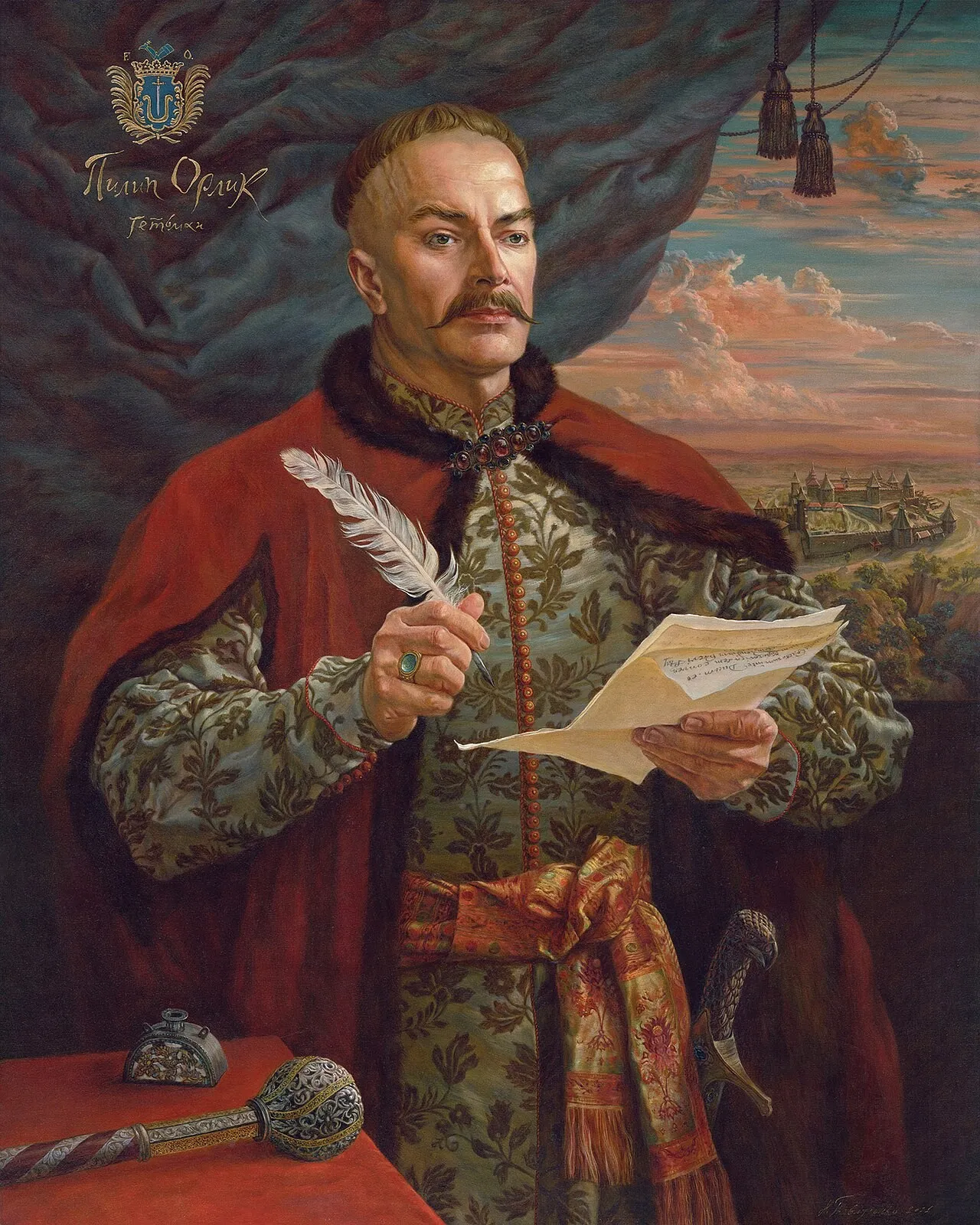
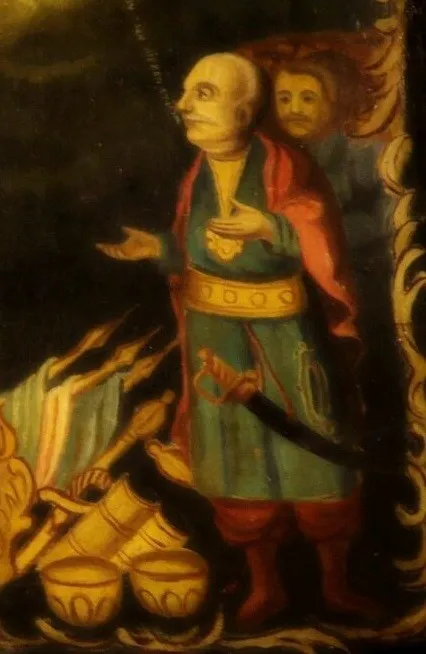
c. 1582–1622
Petro Sahaidachnyi
Hetman, victor at Khotyn
Hetman of the Zaporozhian Host who turned the Cossacks into a disciplined army that stopped the Ottoman Empire at Khotyn. He also defended the Orthodox Church and supported education.
Key accomplishments
- Reformed the Cossack forces into a regular, disciplined army
- Successful naval campaigns against Kaffa (1616) and other Ottoman fortresses
- Decisive role in the Battle of Khotyn (1621) against the Ottoman Empire
- Joined the Kyiv Brotherhood with the entire Zaporozhian Host; helped restore the Orthodox hierarchy (1620)
Who he was
Petro Konashevych-Sahaidachnyi was born in the village of Kulchytsi near Sambir in the Lviv region. His exact date of birth is unknown: around 1582 is usually given, although other dates also appear in the sources. He studied at the Ostroh Academy, one of the first institutions of higher education in Ukraine, and then left for the Zaporozhian Sich, the Cossack stronghold on the Dnipro.
His story
Sahaidachnyi introduced strict discipline into the Cossack forces and turned them from a free, unruly band into an organized army. He led daring naval campaigns on the Black Sea, including the capture of Kaffa in Crimea in 1616, where the Cossacks freed many slaves. In 1618, with an army of 20,000, he took part in the campaign of the Polish crown prince Władysław against Moscow.
In 1621 at Khotyn, a Cossack army of about 40,000, which Sahaidachnyi took command of during the campaign, together with the Polish-Lithuanian army, stopped a much larger Ottoman force. This thwarted Sultan Osman II’s offensive against the Polish-Lithuanian Commonwealth. The hetman was seriously wounded in the battle and died in Kyiv the following year.
Debates and assessments
Sahaidachnyi pursued a policy of loyalty toward the Polish-Lithuanian Commonwealth and tried to win rights for the Cossacks through agreements rather than uprisings. Some Cossacks considered this policy too conciliatory, and it caused disputes.
Why it matters today
Sahaidachnyi combined military strength with care for education and culture. He joined the Kyiv Brotherhood, an Orthodox lay association, together with the entire Zaporozhian Host. He supported the brotherhood school, which later grew into the Kyiv-Mohyla Academy, and left it a large sum in his will. The National Army Academy bears his name.