1893–1919
Vira Kholodna
Film actress, “queen of the screen”
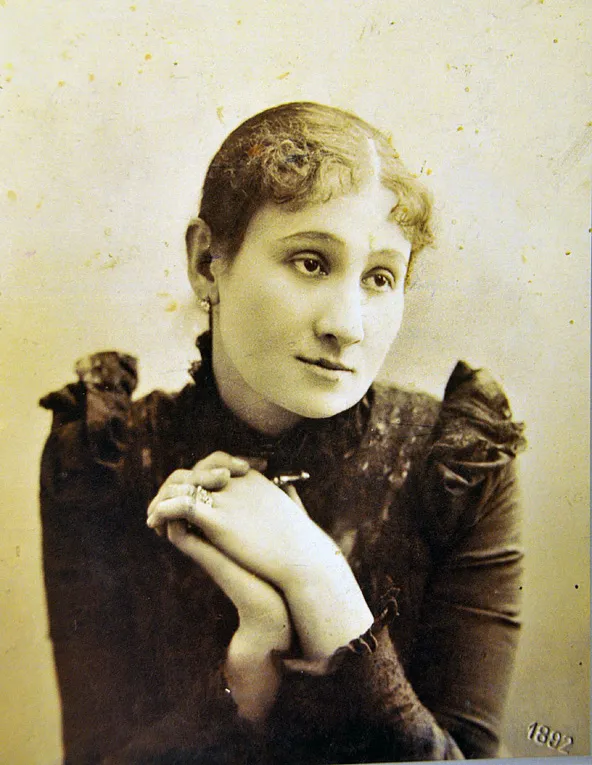
Born in Poltava, she was one of the first great stars of silent cinema in the Russian Empire and was called the “queen of the screen.” In under five years she appeared in dozens of films, including works by the directors Yevgeny Bauer and Pyotr Chardynin. She died in Odesa in 1919, aged 25.
Key accomplishments
- One of the first great stars of silent cinema in the Russian Empire, the “queen of the screen”
- Dozens of film roles in 1914–1919
- Her breakthrough was Yevgeny Bauer’s film Song of Triumphant Love (1915)
- Surviving films include Children of the Age, Mirages and A Life for a Life
Who she was
Vira Levchenko was born in 1893 in Poltava into the family of Vasyl Levchenko, a teacher of literature. She spent her childhood and youth in Moscow, where she attended a girls’ gymnasium and, briefly, the ballet school of the Bolshoi Theatre. She married the lawyer Volodymyr Kholodnyi and took his surname.
Her story
In 1914 Vira Kholodna appeared in a small role in the film Anna Karenina, and the following year the director Yevgeny Bauer gave her the lead in Song of Triumphant Love. That film made her a star. She worked at the Moscow studios of Aleksandr Khanzhonkov and later Dmitry Kharitonov, with the directors Bauer, Pyotr Chardynin and Vladimir Gardin. In under five years dozens of films with her were released, mostly dramas and melodramas, and audiences nicknamed her the “queen of the screen.”
In the summer of 1918 Kharitonov’s troupe moved to Odesa, where Kholodna went on filming and performing at charity concerts. In early 1919 she fell ill with the “Spanish flu,” the pandemic influenza, and on 16 February 1919 she died aged 25. She was buried at the First Christian Cemetery in Odesa; in the 1930s the cemetery was destroyed, and her grave has not survived.
Why it matters today
Vira Kholodna was one of the first film stars in the modern sense of the word. She was born and died in Ukraine, although her career was spent mostly in Moscow cinema; only a few of her films survive, so today the “queen of the screen” is remembered more through legends than through her roles.