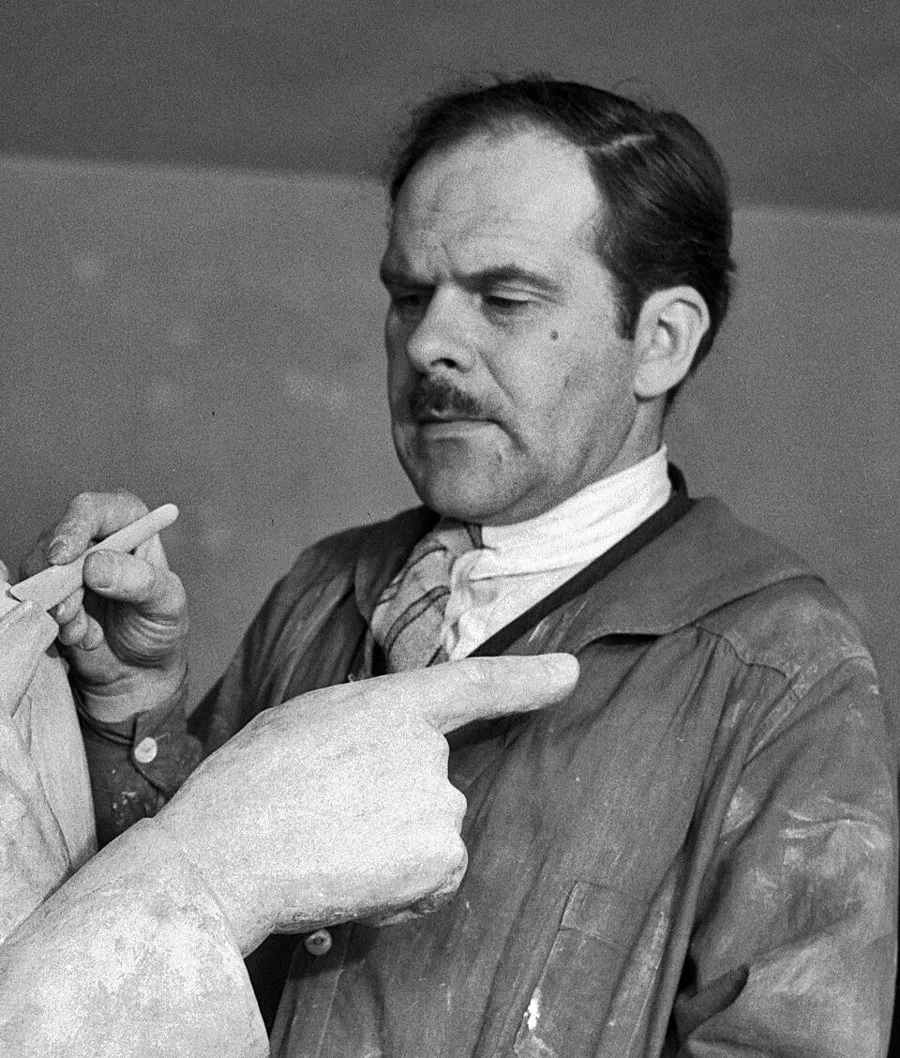
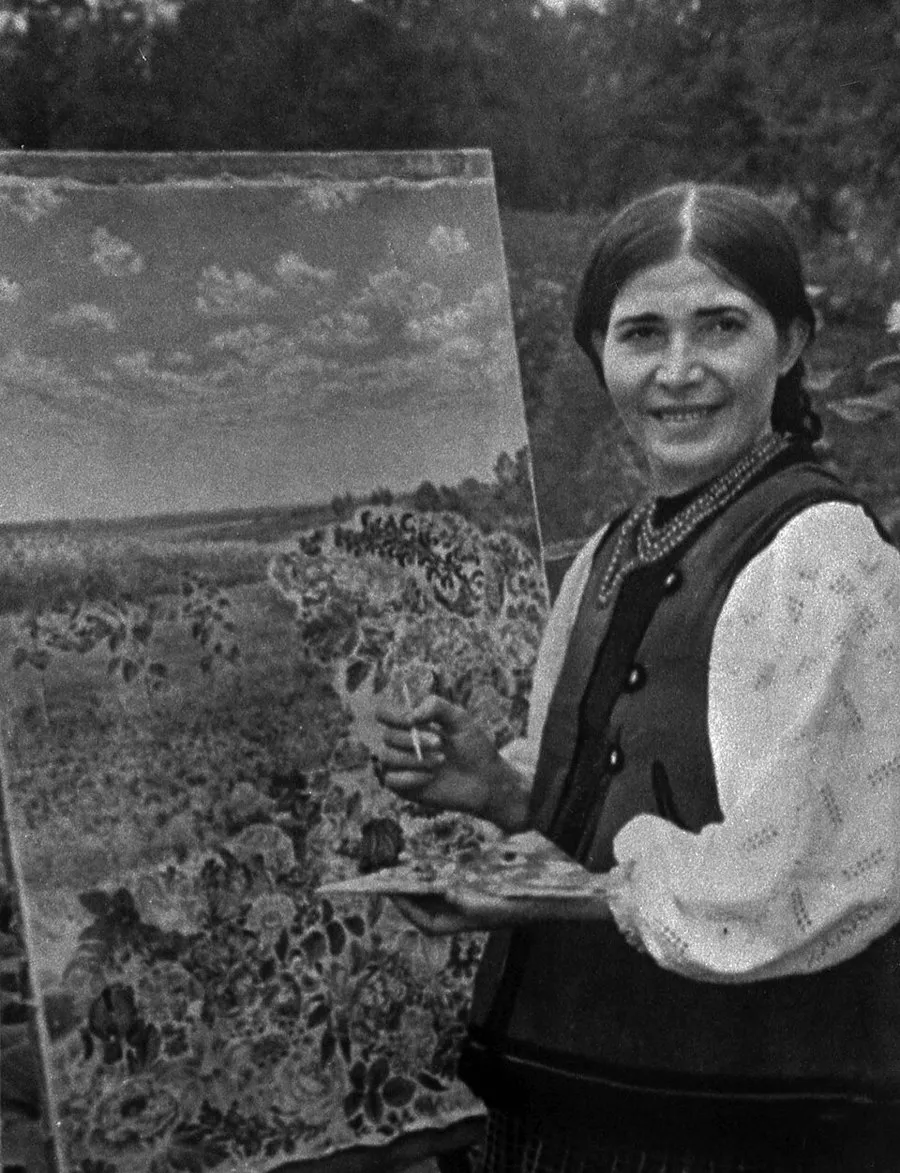
1879–1935
Kazimir Malevich
Painter, founder of Suprematism
A painter and art theorist born in Kyiv to a family of Polish origin. One of the founders of abstract art, the author of Black Square (1915) and the founder of Suprematism.
Key accomplishments
- Founded Suprematism, a movement of geometric abstraction (1915)
- The paintings Black Square on a White Ground, Black Circle and Black Cross (all 1915)
- Director of the Institute of Artistic Culture in Leningrad (1923–1926) and professor at the Kyiv Art Institute (1928–1930)
- The books From Cubism to Suprematism (1916) and Suprematism (1920)
Who he was
Kazimir Malevich was born in 1879 in Kyiv to a family of Polish origin. He spent his childhood and youth in Ukraine, and in 1895–1896 he studied at Mykola Murashko’s Kyiv Drawing School. He later worked in Moscow, Petrograd and Vitebsk, and in 1923–1926 he headed the Institute of Artistic Culture in Leningrad.
His story
In 1915 Malevich founded Suprematism, an art of pure geometric forms and color, and showed Black Square on a White Ground. This painting became a symbol of 20th-century abstract art. Besides painting, he wrote theoretical books and articles and trained students, among them El Lissitzky.
In 1928–1930 Malevich was a professor at the Kyiv Art Institute, and in 1930 he had a solo exhibition in Kyiv. He often turned to peasant themes, and researchers see features of folk art and icon painting in his works. When repression of the intelligentsia began in Ukraine, he returned to Leningrad, where he died in 1935.
Debates and assessments
Malevich’s national identity is still debated. He was born in Kyiv to a Polish family (sources differ on his mother’s origin) and did most of his work in Moscow and Petrograd, so for a long time he was regarded above all as a Russian avant-garde artist. The Polish tradition emphasizes his Polish origin. Ukrainian researchers stress his Kyiv roots, his work in Ukraine and the influence of Ukrainian folk art. According to researchers, in different documents he described himself sometimes as Polish and sometimes as Ukrainian. After 2022 a number of Western museums revised the labels on his works, but there is no consensus among art historians.
Why it matters today
Malevich showed that a painting need not depict objects but can be pure form and color. His ideas still influence painting, design and architecture. In 2012 a street in Kyiv was named after him.