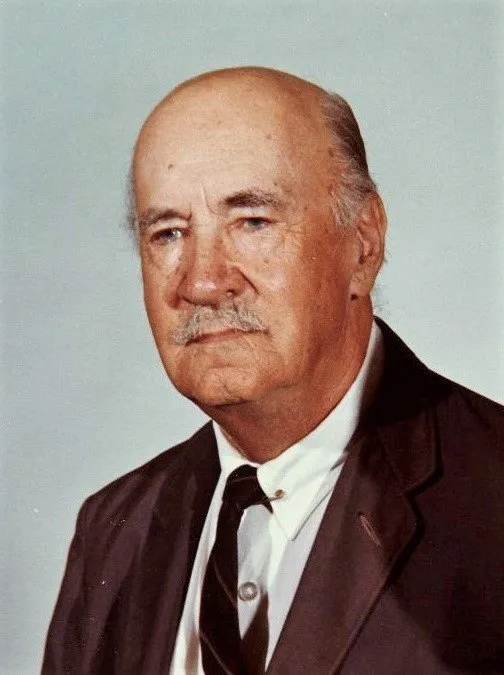
1918–2020
Borys Paton
Electric welding scientist
A scientist in electric welding and metallurgy who headed the Academy of Sciences of Ukraine for 58 years, from 1962 to 2020. Under his leadership electroslag welding was created, and in 1969 the world’s first welding experiments were carried out in space.
Key accomplishments
- Created electroslag welding together with H. Voloshkevych (1949)
- The world’s first welding experiments in space, aboard the Soyuz-6 spacecraft (1969)
- Director of the Institute of Electric Welding (1953–2020) and president of the Academy of Sciences of Ukraine (1962–2020)
- A method of welding living soft human tissue for surgery
Who he was
Borys Paton was born in 1918 in Kyiv into the family of Yevhen Paton, the scientist after whom the Institute of Electric Welding was later named. In 1941 Borys graduated from the Kyiv Industrial Institute (now the Kyiv Polytechnic Institute) and became an engineer at the Krasnoye Sormovo plant in the city of Gorky (now Nizhny Novgorod). From 1942 he worked at the Institute of Electric Welding, which had been evacuated to Nizhny Tagil during the Second World War, and took part in introducing automatic welding of tank armor.
His story
In 1953 Paton became director of the Institute of Electric Welding and headed it until 2020. In 1949, together with H. Voloshkevych, he created electroslag welding, a way of joining very thick metal parts for powerful power plants and heavy equipment. He also pioneered welding in space: in 1969 the world’s first such experiments were carried out aboard the Soyuz-6 spacecraft with the Vulkan unit, and in 1984 welding was done in open space.
In 1962 Paton was elected president of the Academy of Sciences of the Ukrainian SSR (from 1994 the National Academy of Sciences of Ukraine). He headed it for 58 years, until his death in 2020. In Soviet times he became a member of the USSR Academy of Sciences (1962), a laureate of the Stalin (1950) and Lenin (1957) Prizes, twice a Hero of Socialist Labor (1969, 1978), and was a deputy of the Supreme Soviet of the USSR (1962–1989). In independent Ukraine he received the title Hero of Ukraine (1998). According to the Encyclopedia of Modern Ukraine, after 1991, despite sharp cuts in funding, he managed to preserve the Academy’s main scientific schools.
Why it matters today
Technologies from Paton’s school are used in building pipelines and bridges, in rocket engineering and in medicine. In 2021 the State Prize of Ukraine in Science and Technology was renamed the Borys Paton National Prize of Ukraine.